
Biology
- Home
- Biology
Why Study Biology? All About Life!
Biology is the scientific study of living organisms and the natural world. It helps us understand how plants, animals, microorganisms and the human body function, grow, reproduce and interact with their environment. From the smallest cell to entire ecosystems, Biology explains the fascinating processes that make life possible.
Studying Biology at GCSE, IGCSE or A Level develops scientific knowledge, critical thinking, observational skills and problem-solving abilities. It provides an excellent foundation for many university degrees and rewarding careers in healthcare, science, environmental conservation and biotechnology.
Biology is one of the most relevant sciences because it directly affects our health, food supply, environment and quality of life. As new discoveries continue to improve medicine, agriculture and environmental protection, the importance of Biology continues to grow.
Biology Opens the Door to Many Careers
A strong understanding of Biology is highly beneficial, and often essential, for careers and
university degrees in:
- Medicine
- Dentistry
- Veterinary Medicine
- Nursing
- Pharmacy
- Biomedical Science
- Biotechnology
- Genetics and Genomics
- Microbiology
- Biochemistry
- Pharmacy
- Molecular Biology
- Physiology
- Neuroscience
- Environmental Science
- Marine Biology
- Ecology and Conservation
- Agriculture
- Food Science and Nutrition
- Public Health
- Medical Laboratory Science
- Physiotherapy
- Occupational Therapy
- Sports Science
- Forensic Science
- Wildlife Conservation
- Scientific Research
- Teaching and Education
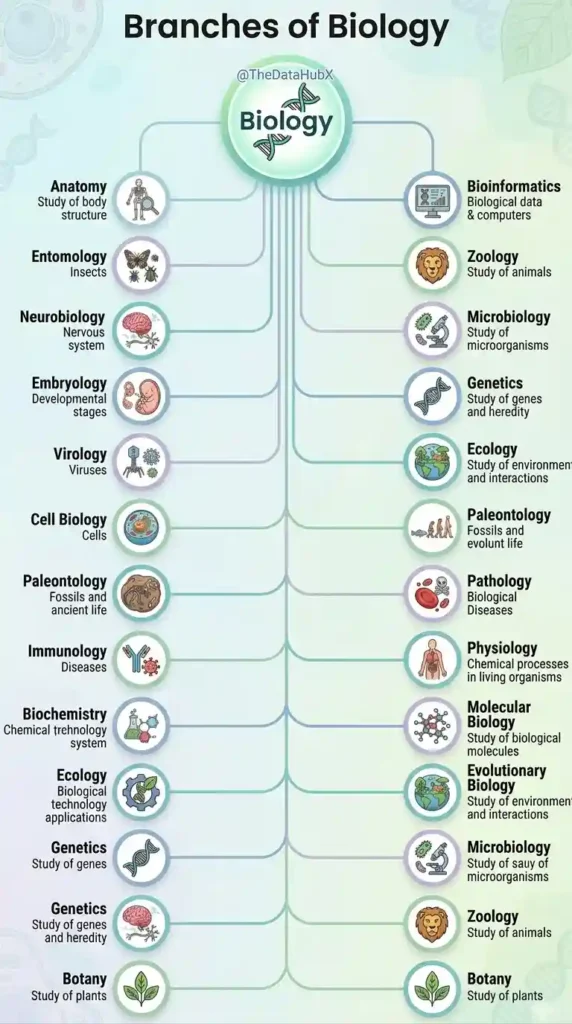
Biology in Everyday Life
Biology influences almost every part of our daily lives. It helps us understand how our bodies work, how diseases spread, why vaccinations protect us, how healthy diets support growth and why protecting biodiversity is essential for future generations.
Knowledge of Biology also helps us make informed decisions about nutrition, exercise, hygiene, environmental conservation and sustainable living.
Where Will I Use This in Real Life?
You use Biology every day, often without realising it. Biology helps us to:
- Understand how the human body grows, heals and fights disease.
- Make informed choices about healthy eating, exercise and personal wellbeing.
- Understand how vaccines and medicines help prevent and treat illnesses.
- Improve farming methods to produce more food while protecting the environment.
- Develop new medicines and medical treatments through scientific research.
- Protect endangered species and conserve natural habitats.
- Ensure food safety through proper production, storage and testing.
- Improve crop production using plant science and genetics.
- Monitor pollution and protect ecosystems from environmental damage.
- Understand how microorganisms are used to produce foods such as yoghurt, cheese and bread.
Whether you are visiting a doctor, eating nutritious food, caring for animals or helping to protect the environment, Biology plays an important role in everyday life.
Skills You Develop Through Biology
Studying Biology helps students develop valuable transferable skills, including:
- Scientific investigation
- Observation and analytical thinking
- Critical thinking
- Problem-solving
- Data collection and interpretation
- Practical laboratory skills
- Communication and scientific reporting
- Research skills
- Accuracy and attention to detail
These skills are highly valued by universities and employers in many different professions.
Fascinating Facts About Biology
Biology is full of incredible discoveries that help us appreciate the complexity of life.
- The human body contains approximately 37 trillion cells, each carrying out specialised functions.
- Your heart beats around 100,000 times every day, pumping blood throughout your body.
- DNA inside a single human cell is about 2 metres long when fully stretched, yet it fits inside a microscopic nucleus.
- The human brain contains around 86 billion nerve cells (neurons) that communicate using electrical and chemical signals.
- Scientists have identified more than 2 million species of living organisms, and many more are believed to remain undiscovered.
- Tiny microorganisms, invisible to the naked eye, play essential roles in producing oxygen, recycling nutrients and making foods such as yoghurt, cheese and bread.
- Plants produce the oxygen we breathe through photosynthesis, making life on Earth possible.
- Every second, millions of cells in your body die and are replaced by new ones, helping your body repair and maintain itself.
Do you happen to know the interesting facts about biology:
- The skin is the largest organ in the human body.
- The human body contains enough blood vessels to stretch for about 100,000 kilometres.
- A single teaspoon of healthy soil contains billions of microorganisms.
- Some bacteria are beneficial and help us digest food and produce vitamins.
- Scientists continue to discover new species of plants, insects and marine life every year.
Why Choose Best Tutors Online?
At Best Tutors Online, we believe that Biology should be understood through curiosity, investigation and real-world examples rather than memorisation alone. Our experienced tutors explain complex biological concepts in a clear and engaging way, helping students build confidence and develop a genuine interest in the subject.
We prepare students thoroughly for GCSE, IGCSE and A Level examinations by strengthening conceptual understanding, improving examination techniques and developing scientific thinking. Our goal is not only to help students achieve outstanding examination results but also to inspire a lifelong appreciation of the living world.