
Pakistan Studies
- Home
- Pakistan Studies
Why Study Pakistan Studies? Must Know Your History!
Pakistan Studies is a fascinating subject that explores the history, geography, culture, economy and political development of Pakistan. It helps students understand how the country has evolved, the challenges it has faced and the opportunities it offers for the future.
Studying Pakistan Studies at GCSE, IGCSE or A Level develops historical understanding, geographical awareness, critical thinking and analytical skills. Students learn how historical events, political decisions, economic development and natural resources continue to shape modern Pakistan.
Beyond examination success, Pakistan Studies encourages students to become informed, responsible and active citizens who understand the importance of national identity, cultural diversity and sustainable development.
Pakistan Studies Opens the Door to Many Careers
Although Pakistan Studies is not usually a direct requirement for a specific profession, it
provides valuable knowledge and transferable skills that are highly beneficial for university
degrees and careers in:
- History
- Geography
- Political Science
- International Relations
- Law
- Public Administration
- Civil Service
- Journalism
- Media and Broadcasting
- Education and Teaching
- Sociology
- Anthropology
- Economics
- Development Studies
- Environmental Science
- Tourism and Heritage Management
- Urban and Regional Planning
- Diplomacy
- Public Policy
- Research and Academia
The research, communication and analytical skills developed through Pakistan Studies arealso valuable in business, management and many other professional fields.
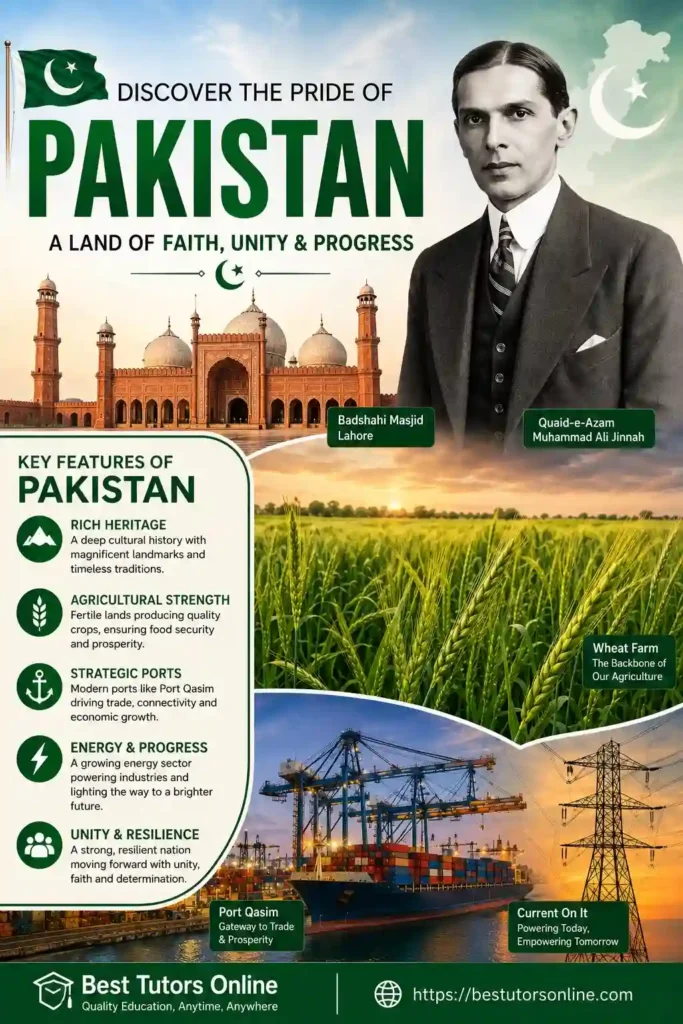
Pakistan Studies in Everyday Life
Pakistan Studies helps students understand the society in which they live. It explains how government works, how resources are managed, why environmental conservation is important and how historical events continue to influence the country’s development.
The subject also encourages students to appreciate Pakistan's cultural diversity,
geographical features and rich historical heritage while developing a deeper understandingof civic responsibilities and national development.
Where Will I Use This in Real Life?
Knowledge gained through Pakistan Studies is useful in many practical situations, including:
- Understanding Pakistan's history and national development.
- Appreciating the country's cultural and linguistic diversity.
- Understanding how the government and democratic institutions function.
- Interpreting current affairs and national issues more critically.
- Making informed decisions as a responsible citizen.
- Understanding environmental challenges such as water shortages, climate change and natural disasters.
- Appreciating Pakistan's geography and natural resources.
- Supporting careers in education, journalism, public service and government.
- Understanding Pakistan's role in regional and international affairs.
- Developing research, writing and presentation skills that are useful in higher education and professional life.
The knowledge and skills gained from Pakistan Studies help students become informed citizens who can contribute positively to society.
Skills You Develop Through Pakistan Studies
Studying Pakistan Studies helps students develop many valuable transferable skills,
including:
- Critical thinking
- Historical analysis
- Geographical interpretation
- Research skills
- Essay writing
- Source evaluation
- Communication skills
- Problem-solving
- Independent thinking
- Data interpretation
- Presentation skills
- Decision-making
These skills are highly valued by universities and employers across a wide range of professions.
Fascinating Facts About Pakistan Studies
Pakistan has a rich history, remarkable geography and diverse cultural heritage.
- Pakistan became an independent nation on 14 August 1947.
- It is the fifth most populous country in the world.
- Pakistan is home to one of the world's earliest civilisations—the Indus Valley Civilisation, which flourished more than 4,000 years ago.
- K2, the world's second-highest mountain, is located in Pakistan and attracts mountaineers from around the world.
- The country has a wide variety of landscapes, including mountains, deserts, rivers, forests, plateaus and a coastline along the Arabian Sea.
- The Indus River is one of the longest rivers in Asia and plays a vital role in agriculture, industry and everyday life.
- Pakistan is rich in natural resources, including natural gas, coal, minerals and fertile agricultural land.
- The country has a diverse cultural heritage with many regional languages, traditions, festivals and historical landmarks.
- Pakistan has six UNESCO World Heritage Sites, including the archaeological remains of Mohenjo-daro and the Buddhist ruins at Taxila.
- Agriculture remains one of the country's most important economic sectors, supporting millions of people and contributing significantly to exports.
These fascinating facts demonstrate why Pakistan Studies is an important subject for
understanding the country's past, present and future.
"Why Pakistan Studies Matters Today"
Pakistan Studies helps students understand important issues such as climate change, water management, economic development, population growth, energy resources and international relations. These topics are shaping Pakistan’s future and require informed, thoughtful citizens who can contribute to solving real-world challenges.
Why Choose Best Tutors Online?
At Best Tutors Online, we believe that Pakistan Studies should encourage curiosity, critical thinking and a genuine understanding of the nation’s history, geography and development. Our experienced tutors explain complex topics using clear language, maps, historical sources and real-world examples to make learning engaging and meaningful.
We prepare students thoroughly for GCSE, IGCSE and A Level examinations by strengthening historical knowledge, geographical understanding, source analysis and examination techniques. Our aim is to help every student achieve excellent examination results while developing a lifelong appreciation of Pakistan’s history, culture and national development.